Working out how to mark someone’s achievement properly can take some thought. It’s important to balance the right level of respect and praise without going over the top.
The best types of recognition people remember is tied to something they did. Milestones, project wins and long service deserve something lasting, backed up by everyday habits that keep appreciation visible the rest of the year.
Research from Achievers found that only 23% of UK employees feel meaningfully appreciated at work. At MedalStudio we make over 200,000 personalised medals and awards a year from our Yorkshire workshop, so we see first-hand what recognition people value enough to display on their desk for years.
Below we cover the milestones worth marking, what makes a personalised award land, everyday habits that cost nothing, UK tax rules, and the mistakes that derail even well-meaning schemes.

Milestones Worth Marking Properly
These are the moments where recognition sticks, because there is a clear reason behind it and something to show for it afterwards.
1. Annual or quarterly awards ceremonies. A short, well-run ceremony gives the year a rhythm and turns recognition into an event people look forward to. Keep speeches brief and the focus on the recipients. A quarterly cadence works better than annual for most teams, because the achievement is still fresh when it gets recognised.
2. Work anniversaries and long service. Five years, ten years, twenty years. These are the easiest milestones to mark and the most commonly missed. An award showing the employee’s start date and years of service says the company was paying attention the whole time.
3. Project and launch milestones. The end of a long project is the natural moment for team recognition. It also avoids the trap of only ever rewarding the same visible individuals.
4. Team awards. Best collaboration, most improved department, the team that carried a difficult quarter. Team recognition spreads the credit to the people whose contribution is harder to see from the outside.
5. Customer-nominated awards. Letting client feedback trigger recognition gives the award external evidence behind it. A “Customer Champion” based on real testimonials carries weight precisely because the company did not decide it alone.
6. Company events and away days. Pairing recognition with something people already enjoy, a summer social or an end-of-year get-together, means the awards land in a room that is already in a good mood rather than at the end of a Tuesday meeting.
7. Professional development budgets. A course subscription or conference ticket says the company is investing in what someone could go on to do, rather than paying them off for what they have already done. For people who have shown potential for a bigger role, this often lands harder than anything on a shelf.

What Makes a Personalised Award Worth Keeping
Personalised awards are what we specialise in, and the difference between one that gets displayed for a decade and one that ends up in a drawer usually comes down to three things.
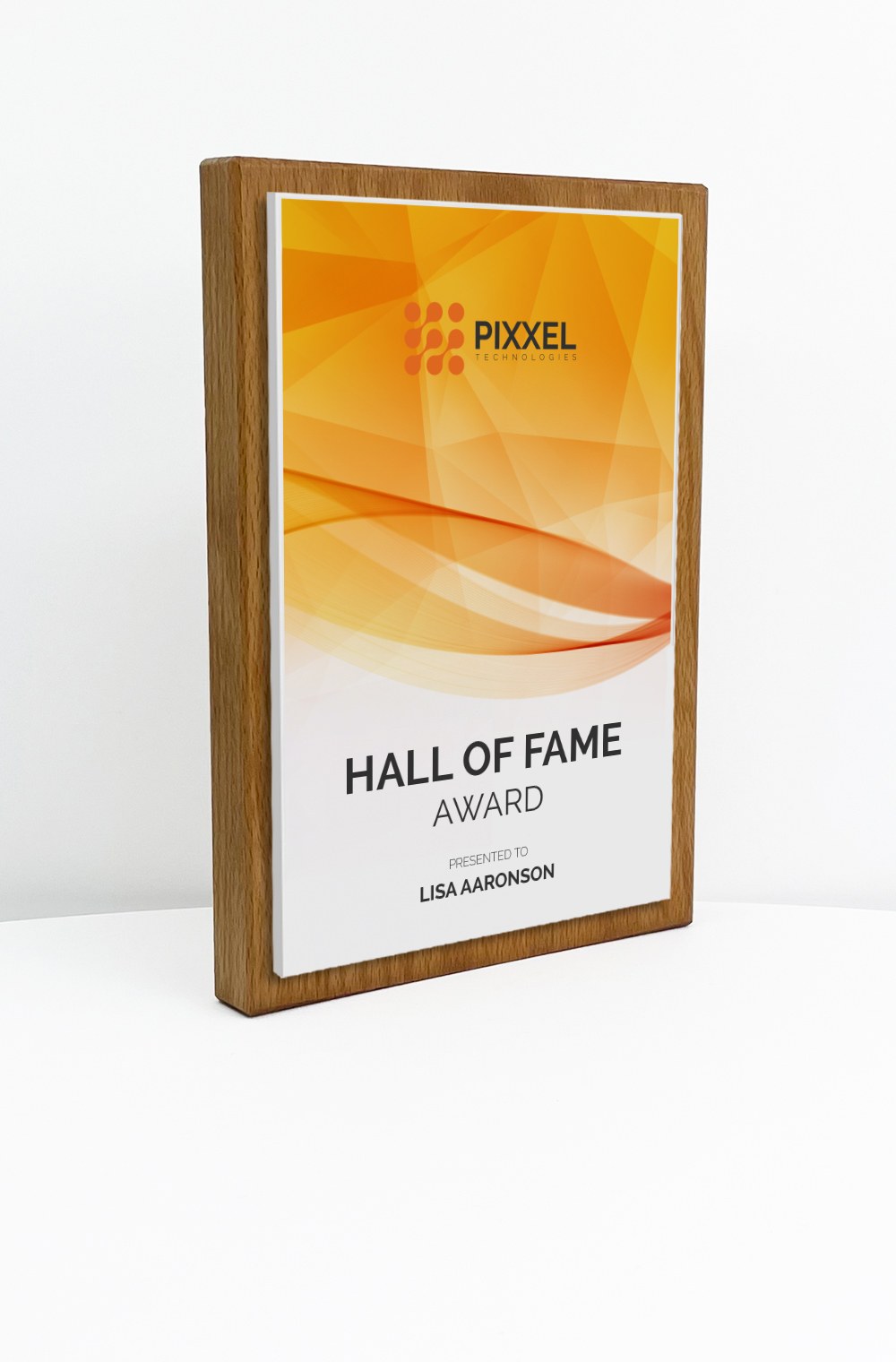
The name. At minimum, the recipient’s name on the award. It is the single change that moves an object from “company merchandise” to “I earned this”.
The specific achievement. Not just “Employee of the Year”, but what they actually did and when. The detail is what makes it readable years later, to them and to anyone who asks about it.
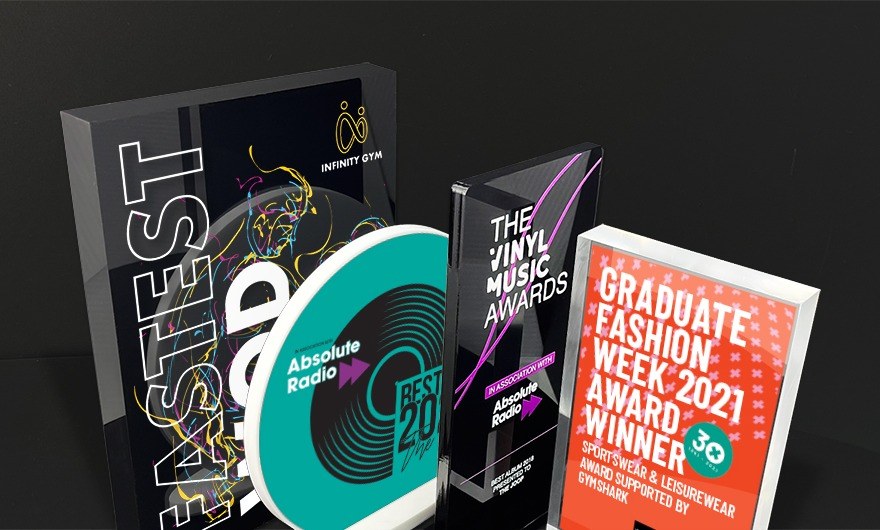
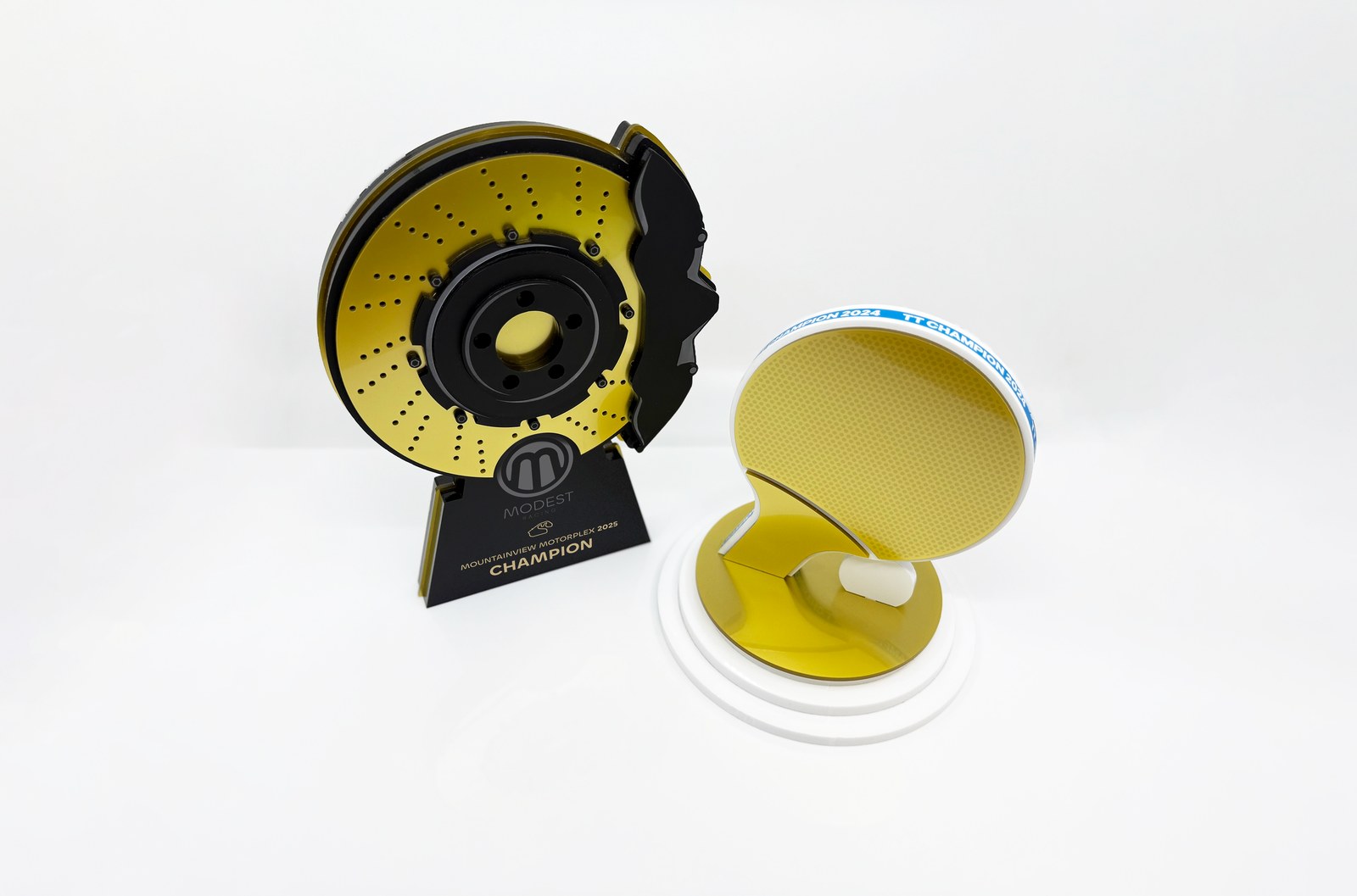
A design that means something. Our custom awards collection covers acrylic, wooden and metal, all designed around your own artwork with a free design service and a two-week turnaround. Acrylic suits modern office settings and takes full-colour printing well. Wood from our eco-friendly range suits companies with a sustainability story to tell. Cast metal carries weight, literally, and suits long-service and headline awards.
For achievement-led recognition where an award feels too formal, achievement medals work well as a lighter-touch alternative, particularly for larger teams.

Naming Your Award Categories
Categories give structure to recognition and make the awards feel earned rather than handed out. Living Our Values, The Lifesaver, Rising Star, Behind-the-Scenes Star, Team Player and Culture Connector work because they describe a behaviour rather than an output.
The wording on the award itself is worth as much thought as the category name. Our guide to what to write on employee recognition awards has example wording for a range of categories.
A set of named categories also gives you a reason to design a matching family of awards, so the whole scheme reads as one thing rather than a different trophy each year.
Everyday Recognition That Costs Nothing
Milestones are the anchor, but the habits between them are what stop recognition feeling like an annual box-ticking exercise. None of these cost anything.
Public shout-outs at team meetings. Open company meetings with two minutes of recognition. Name the person, name the specific thing they did, and explain why it mattered.
Handwritten thank-you notes. A short note from a manager carries more weight than most people expect.
Peer-to-peer nominations. Colleagues nominating each other often lands differently from manager-led praise, because it comes from the people who see the day-to-day effort.
A wall of fame. A photo, the person’s name, and what they did, rotated monthly. For remote teams, a dedicated Slack or Teams channel does the same job.
Social media shout-outs. A LinkedIn post tagging the employee, with their permission, gives recognition a public and lasting quality. Worth asking first, as some people prefer something quieter.
Reward Giving: Tax 101
Non-cash gifts can be tax-free under HMRC’s trivial benefits exemption, provided all four of these apply:
- It costs £50 or less
- It is not cash or a cash voucher
- It is not a reward for work or performance
- It is not written into the employee’s contract
That third condition is the one most schemes trip over. A gift to say “thanks for being part of the team” can qualify. A bonus for hitting a sales target cannot.
Long-service awards sit under a separate and more generous exemption. A non-cash award is exempt if:
- The employee has 20 or more years’ service
- The award is worth under £50 per year of service, up to £1,000 at 20 years
- No similar award was given in the previous 10 years
This is general guidance, not tax advice. Check the specifics with your accountant.
Where Staff Recognition Goes Wrong
Employee of the month becomes a rota. When everyone knows their turn is coming, the award loses meaning. Varying the cadence or retiring the format usually fixes it. There are fresh approaches to employee of the month in our dedicated guide.
Public praise for a private person. Not everyone wants to be singled out in front of 200 colleagues. Asking how people prefer to be recognised beats assuming a stage moment is a reward.
Jokey awards that miss. Light-hearted categories can build culture, but they can also land badly. Our guide to funny employee award ideas covers how to keep humour inclusive.
Reward schemes with no owner. If nobody is responsible for running the programme, it will quietly die by month three. Employee recognition can be critical for team morale, so it is worth having someone be responsible to make sure it is done right.
Generic awards that gather dust. A mass-produced trophy with no personalisation ends up in a drawer. Personalised awards are what we specialise in, whether that is simply including a name or designing custom artwork that represents the milestone or the actions someone took to earn it.
Making It Count
Getting recognition right needs three qualities:
It is specific about what the person did,
Timely enough to still feel relevant, and
Personal enough to show real thought went into it.
A well-timed shout-out matters more than a late-arriving expensive gift.
Our recommendation is to build the year around a handful of milestones that deserve marking, keep the free everyday habits running in between, and make the milestone awards personal enough that they still mean something a decade later. If you want those markers to hold up that long, personalisation is what does it.
Thanks for reading. When you are ready to explore personalised awards for your team, browse our custom awards collection or get in touch with our design team for a free mock-up.
Updated: 07/08/2026